












































The Book Club and one student’s ideas are turning unused or old books into new opportunities for teens in the foster system, starting this week.
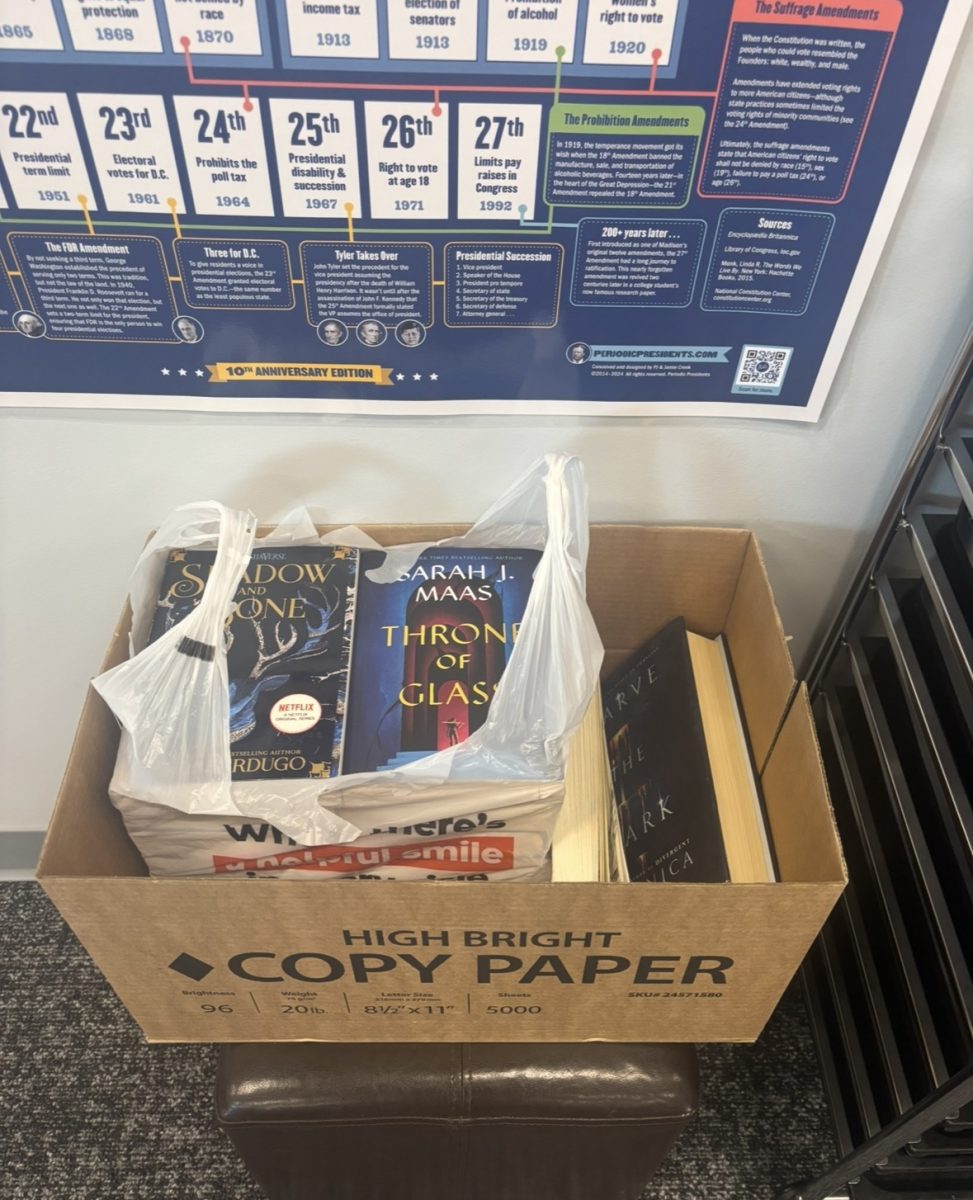
A book drive organized by Gretna East Book Club, with the help of senior Carly Drake, will be accepting book donations from Monday, April 20, to Monday, May 4. Contributions will go to foster kids in need; anyone wanting to donate can bring books to their AEP teacher or to Kelly Mcvey’s room 242.
The Book Club is looking for donations of young adult books that are gently used, for ages 12 and up. Drake is accepting donations for younger kids aged 12 and under. She will take those donations at the same place as the book club.
“I would recommend donating books for younger kids that are good for learning words and how to piece them together into sentences for all ages, so some more advanced and some not,” Drake said. “I also think some intermediate-level books would be good for kids who are looking to get better at reading and who already know the basics. Any books are great, though, and would gladly be accepted.”
Drake’s teacher, Elizabeth Ackerman, reached out to Mcvey as she is the book club sponsor, when she discovered that Carly was planning to do a book drive for her senior advocacy plan as a part of her Dual Credit English Composition II class. Once Drake discovered that Mcvey was already planning on hosting a book drive, she requested to “piggyback” off of Mcvey’s plan to hopefully get more books donated.
“I am focusing on making a difference on a smaller scale,” Drake said. “I thought that a local book drive would be a good way to get people to notice the topic and realize why I think it needs to be advocated for.”
Mcvey originally came up with the idea after volunteering at Foster Heart + Hope, a non-profit organization to help foster children with a “loving experience that not only addresses their needs but also boosts their confidence and helps shine from within.” When Mcvey saw teens lacking age-appropriate reading material, she decided to help in any way possible.
Teenagers in the foster care system often lack the most basic resources that many take advantage of every day. According to the National Council for Adoption, “Research has consistently shown that growing up in a safe and stable family environment is critical for children’s wellbeing. For children who remain in foster care for extended periods, this stability is often lacking, and the consequences can be serious and long-lasting.”
“I want people to know why this is important,” Drake said. “ We are very lucky to have our great library and go to school in a district that cares about our reading so much, but not all kids have that. Everyone should be able to learn to read.”