


























SPOILER ALERT
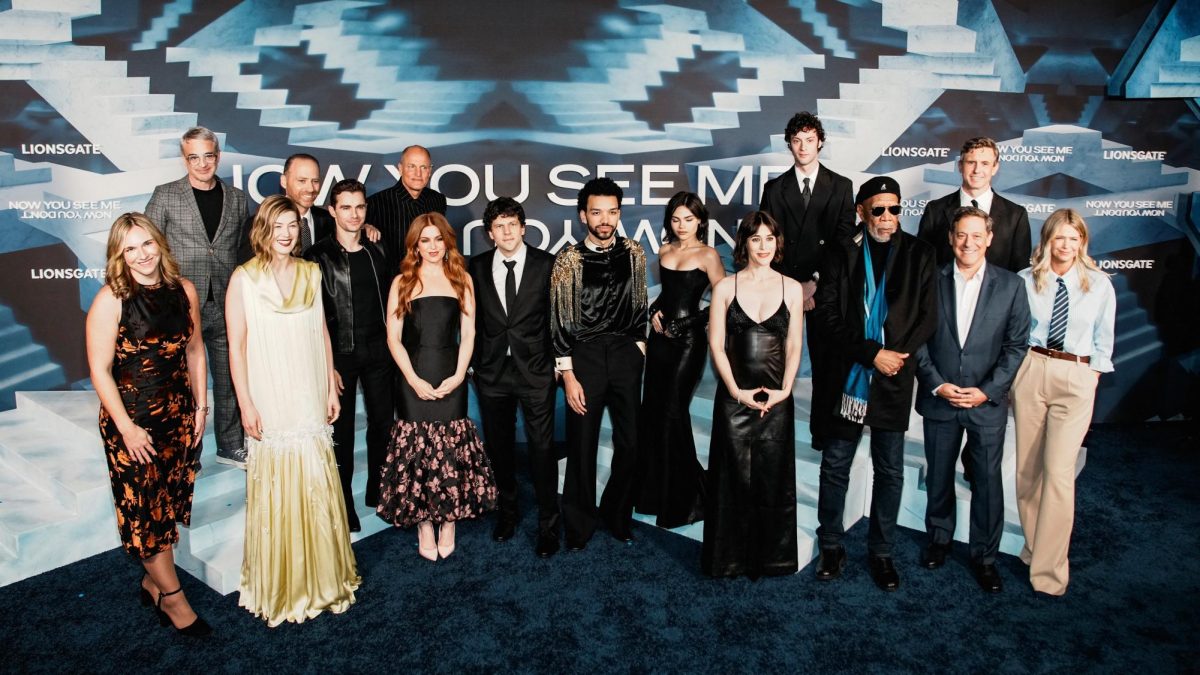
The Four Horsemen are back for a third installment of the “Now You See Me” franchise, along with some new faces. For fans like me who still revisit the finale of the first film to catch new details, this long-awaited installment arrives with equal parts hope and caution. The franchise has always walked a tightrope between clever showmanship and outright impossibility.
After years of waiting, it was hard not to wonder whether this new chapter would recapture the grounded magic that made the earlier films so fun to dissect. Though the film excels with creative camera tricks and fun special effects that made the first movies feel special, the illusion of realism slips, and moments of cheesiness creep into both the performances and the plot.
The original four illusionists, J. Daniel Atlas, played by Jesse Eisenberg, Merritt McKinney, played by Woody Harrelson, Jack Wilder, played by Dave Franco and Henley Reeves, played by Isla Fisher, are joined by three upstart magicians with the same Robin Hood-esque morals. The charismatic frontman Bosco Leroy, played by Dominic Sessa, the sleight-of-hand specialist June, played by Ariana Greenblatt, and the behind-the-scenes mastermind Charlie, played by Justice Smith, step into the spotlight as recruits, teaming up to pursue a wealthy yet corrupt diamond tycoon and, specifically, the fictional Heart Diamond, the largest diamond ever discovered.
The film opens with an exciting reminder of the impressiveness of the Four Horsemen. Following their supposed permanent disappearance after the resolution of the second movie, mysterious posters begin popping up, leaking a secret show in an abandoned building in New York. When the show starts, the magicians all appear at different parts around the stage and announce their first trick: possession. A volunteer is “randomly” chosen from the audience for the act.
The volunteer, however, is the only real person on stage, and is not truly a volunteer, but instead Bosco. The Four Horsemen are, in fact, simply projections, and this “act” is masterminded by Bosco, June and Charlie to expose a group of cryptocurrency scammers. A secret performance is exactly what the Four Horsemen would do if they were to return, which not only leads the fictional audience to believe in the illusion but also the audience outside the screen who have followed the Horsemen in the prequels. It’s an exciting moment of realization when the filmmakers reveal the secret after the show and the illusionists are already laughing and walking down the street.
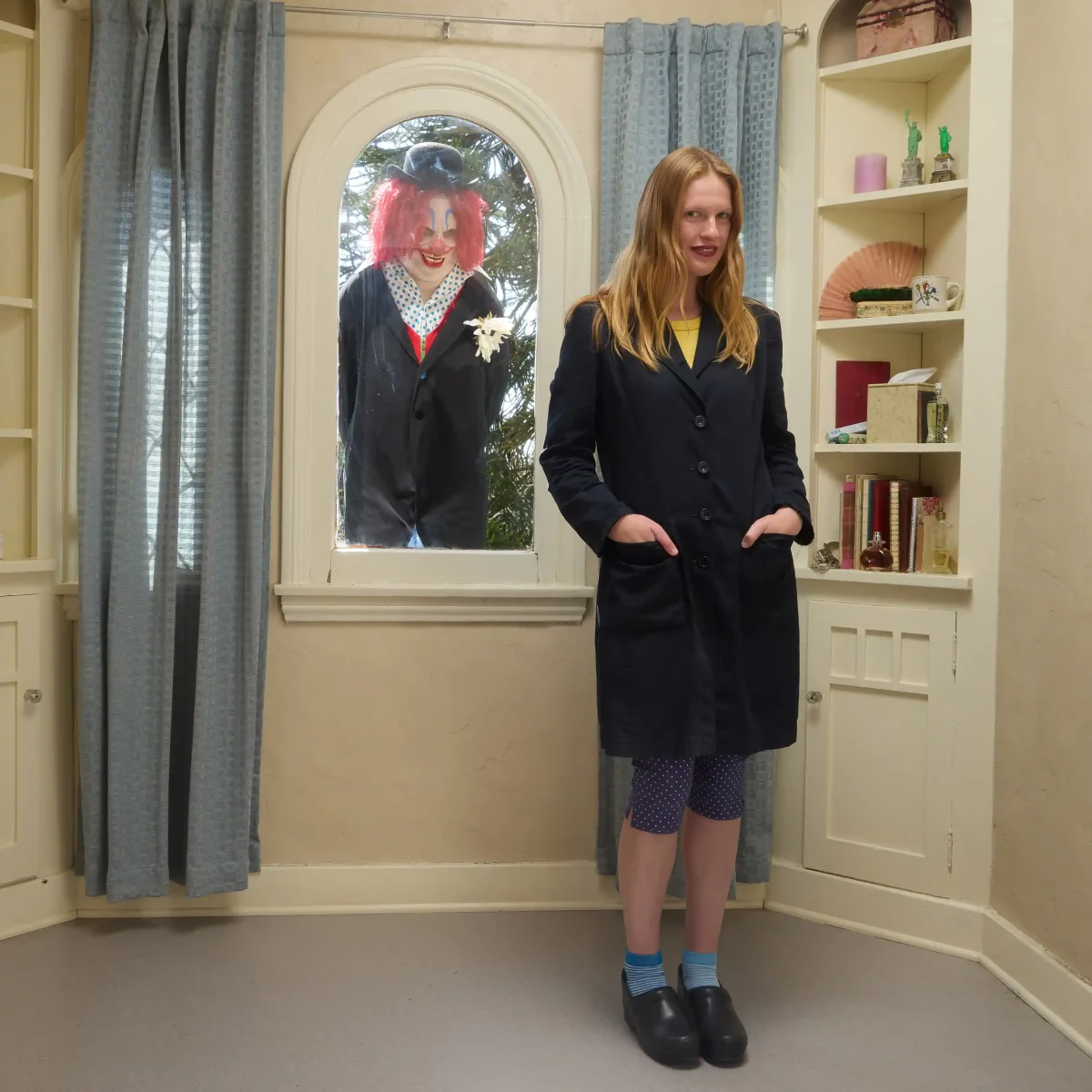
Another of the film’s standout sequences occurs when the Horsemen, along with the newcomers, arrive at a French chateau as part of a message they received from the secret organization that gives them their missions, The Eye. Inside the chateau, the Horsemen explore several rooms filled with illusions. One, discovered by Greenblatt and Franco’s characters, is a classic Ames room: it appears rectangular from a peephole but is actually trapezoidal. Because of this optical illusion, when two people stand at both back corners of the room, one person appears dramatically larger than the other, although they appear the same distance away.
The camerawork was excellent during this scene, and the illusion worked. While Greenblatt maneuvered around tiny policemen in one corner, Franco dipped and dodged gargantuan officers in the other. It was fun to watch, especially when the characters would switch sides and suddenly grow or shrink in size. The other characters battled police in a rotating hallway, a mirror maze and a Hogwarts-style changing stairway. Scenes like this showcase the film’s technical creativity, though not all illusions in the movie feel quite as convincing.
The final trick of the film, although well executed by the filmmakers, feels unbelievably spontaneous. After escaping from jail after the aforementioned chateau scene, the Horsemen immediately fly to Abu Dhabi to rescue McKinney from Veronika Vanderburg, played by Rosamund Pike. All in the time of a flight from France to Abu Dhabi, the Horsemen organize an entire rig to be built for their live performance, underground tunnels to be dug and publicize their show to thousands of people, all things that would take days or weeks to do. That’s before considering everything that goes wrong, including Vanderburg trapping the original Horsemen in a cage to suffocate. Eventually, the Horsemen, with the help of the newbies, get Veronika right where they want her and can expose her.
The sheer scale of this final illusion pushes the franchise’s already stretching realism to its breaking point. In the earlier films, the Horsemen’s final tricks, although outlandish, felt like exaggerated versions of something a brilliant team of magicians could conceivably pull off with enough preparation. This time, however, the spectacle drifts so far into impossibility that it weakens the suspense. The tension of wondering how a trick works is replaced with the assumption that the answer is simply “movie magic,” and that’s not what the franchise is meant to be.
As a result, the reveal, which is normally the franchise’s most satisfying moment, leaves the audience with more questions than answers. However, the plot twist injected into this final trick is satisfying and genuinely shocks the audience.
Still, the film’s charm manages to shine through its implausibilities. The cast, both returning and new, brings a lively, mischievous energy that keeps the story entertaining. Isla Fisher’s return as Henley Reeves after her absence in the second movie is a welcome revival of the original team’s chemistry, and the three newcomers blend in smoothly. Even Mark Ruffalo’s role as Dylan Shrike, diminished from the previous films, provides a cliffhanger that sets up a fourth installment of the series.
Ultimately, “Now You See Me: Now You Don’t” succeeds most when it leans into clever, practical feeling illusions like the chateau scene. The movie may not recapture the grounded magic of the original, but it offers enough twists, playful misdirection and character-driven fun to satisfy fans who are willing to suspend their disbelief a bit more than usual. While the tricks are becoming flashier and more elaborate than ever, the film proves its own point. The closer you look, the less you see, especially when the illusion stretches a bit too far.