


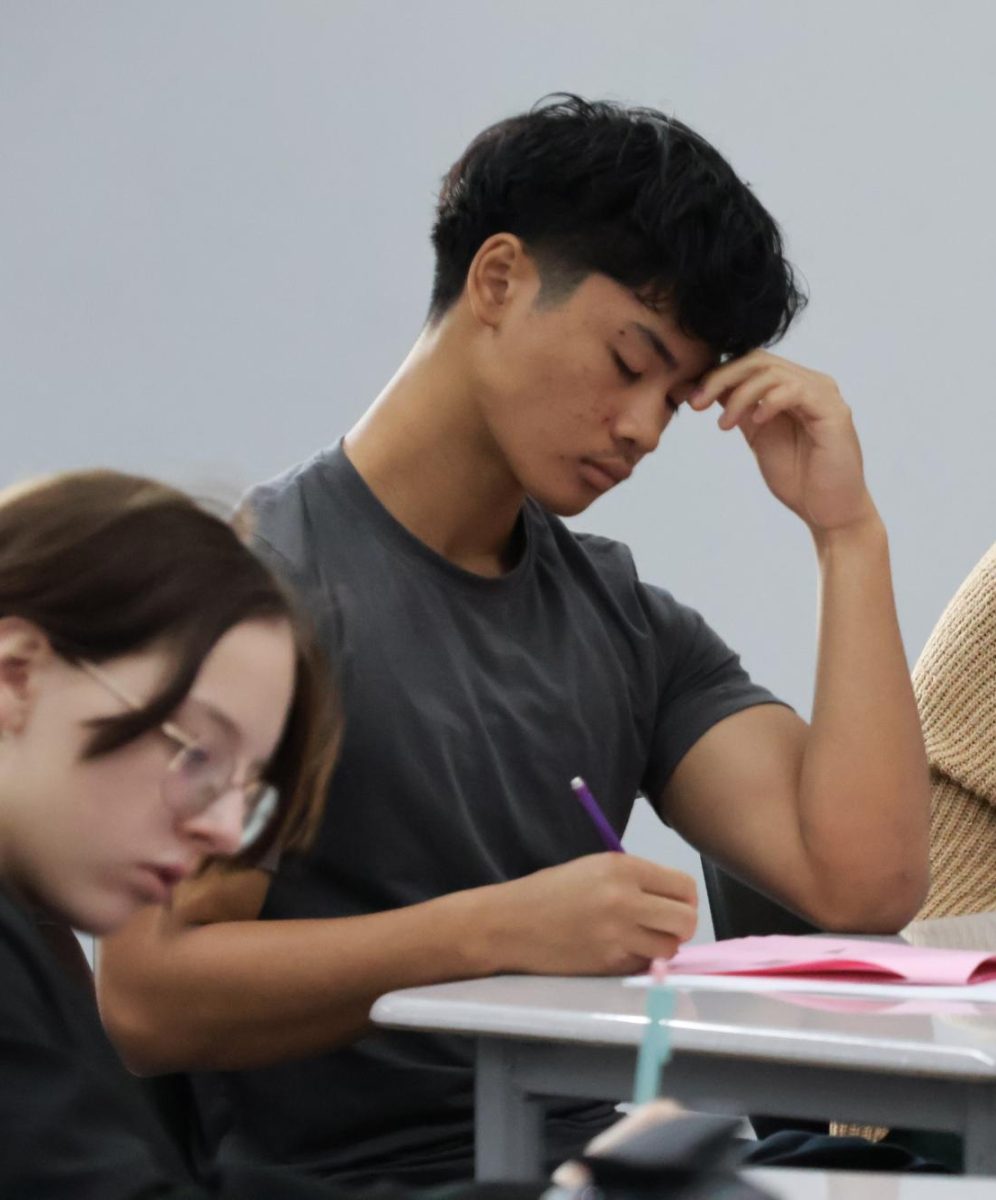

















































Before the sun rises, senior Fatma Suliman is already awake. She eats, prays and prepares for going the rest of the day without a single bite of food or sip of water until sunset. By the time she breaks her fast, she has gone nearly 12 hours without either. For Suliman and other Muslim students, this is not a hardship: it is a privilege.
Ramadan, the ninth month of the Islamic calendar, requires Muslims to fast from sunrise to sunset for 30 days. Students who observe the holiday say the outside world often misses the point.
“A lot of people just interpret that we don’t eat for 30 days, and that’s really not it,” Suliman said. “The biggest reason why Ramadan was built is to understand how those who don’t have access to food and water feel.”
That sense of empathy extends beyond the Muslim community. Senior Madelynn Baker-Klassen fasts alongside Suliman during the school day, even though she is not Muslim.
“I didn’t want her to feel like she was alone in this,” Baker-Klassen said. “At first, fasting was super hard. I was hungry all the time and tired during school and was questioning how Fatma could do it without complaining. As the days went on, I started feeling better about myself. My self-esteem went up, and I began feeling almost at peace all the time.”
That spirit of solidarity pushes Suliman to be more intentional about generosity and community.
“I think it’s really rewarding because it’s supposed to take away our temptation, and we’re supposed to give back to the community,” she said. “It’s also kind of a reward to eat at the end of the day.”
Senior Abdul Wahid-Rahmanzai described Ramadan as a “full reset” for the mind, the body and the spirit.
“On a spiritual level, it clears away daily distractions, helping you focus on your faith and feel more empathy for those in need,” he said. “Physically, fasting gives your digestive system a break and allows your body to clean out old, damaged cells, which can boost your energy.”
The reset, he believes, proves something larger about human willpower.
“By resisting your basic urges for a month, you prove to yourself that your mind is stronger than your cravings,” Wahid-Rahmanzai said.
For student athletes, the fast presents additional physical challenges.
“When I have to go to track, that’s a lot harder since I’m more dehydrated,” junior Alfarabi Marat said. “We have to run so many miles, and I’m doing that without energy and water. The coaches are understanding, though.”
Beyond the physical demands, Ramadan heightens awareness of everyday interactions and their spiritual weight for observers.
“We feel the gratitude from others more during Ramadan,” Marat said. “When you open a door for someone, it is said that you get 70 times the gratitude as you would if you did it outside of Ramadan.”
Students also find themselves fielding questions from classmates and friends who are curious about what Ramadan actually involves. Most describe those interactions as entirely positive.
“Most of my non-Muslim friends are very curious because they know what the general meaning of Ramadan is, but also want to take a deeper dive into what it actually does and means,” Wahid-Rahmanzai said.
For some, the most lasting impact of Ramadan is not spiritual or physical. It is personal.
“The most rewarding part is the internal sense of discipline,” Wahid-Rahmanzai said. “It’s the feeling of looking in the mirror and knowing I have the self-control to master my own body and mind.”
As the month draws to a close this coming Thursday, students are already looking ahead to the celebration that follows.
“After Ramadan, we break our fast with a holiday called Eid (al-Fitr),” Suliman said. “It’s like a big feast, and it’s one of the best holidays in my opinion, especially because I get money.”