



















































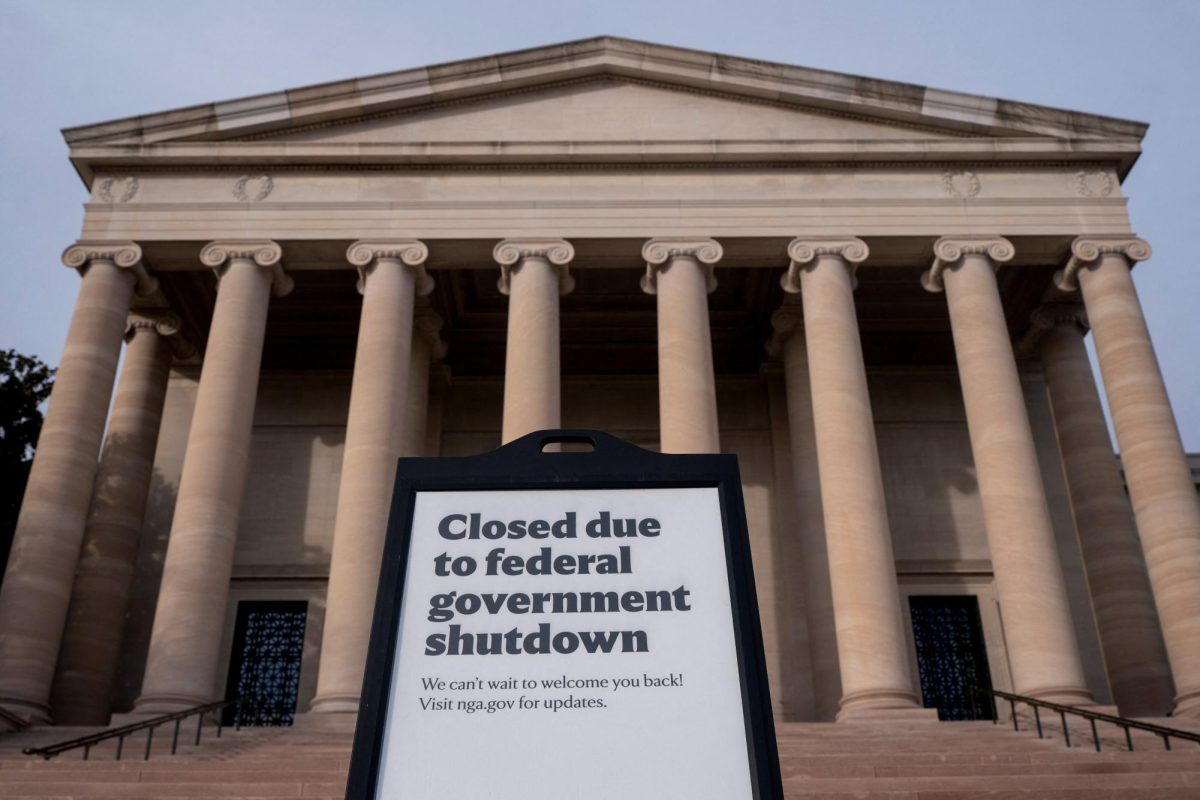
After 43 days, the longest shutdown in history came to an end on Nov. 13.
Why did this happen?
The two major political parties, the Republicans and the Democrats, couldn’t agree on a bill to fund the government. Currently, the Republicans control, or have more party members in, both the House and the Senate.
To pass the bill in the Senate, the Republicans were short of 60 votes, which gave the Democrats some room to negotiate. The Democrats wanted changes to be made to the bill in order for them to vote on it, including adding back Medicaid, a program that President Trump cut, which allows Americans who qualify to get free or low-cost health insurance.
The previous funding bill expired, causing a new one to be written. When a bill could not be voted on by Oct.1, the government officially went into shutdown.
What were the effects?
Certain government services remained open as they are deemed necessary; however, most workers were going unpaid until the government reopened.
Hospital medical care, law enforcement, border protection and Immigration and Customs Enforcement (ICE) all continued to function as normal.
Many flights were being cancelled or delayed due to a shortage of air traffic controllers, who were expected to work without pay. Hour-long waits outside of airports were expected, with long lines at the Transportation Security Administration (TSA).
The organization SNAP (Supplemental Nutrition Assistance Program), commonly known as food stamps, ran out of funds due to a lack of new government funding. An oral court order required the Trump administration to tap into the funds stored for SNAP by Friday, Nov. 7. The order took effect late last Sunday night.
Other federally funded services, like preschools or institutions like the Smithsonian, were experiencing either complete shutdowns or being reduced. National Parks were also experiencing shortages, with certain experiences being closed.
How did it end?

The Senate was able to approve a bill to end the shutdown on Nov. 10, in a 60-40 vote, when Democrats conceded to Republicans, and eight of them joined the Republicans, giving up their fight for Medicaid. The bill was being sent to the House of Representatives, and they voted on it on Nov. 12. Once the House approved it, the bill went to President Donald Trump’s desk for him to sign it into effect.
This shutdown was the longest government shutdown in history, with the second longest being in Trump’s first term, late 2018 to early 2019.
What happens now?
Government employees will be retroactively paid, with their long-delayed paychecks and benefits being processed.
The Smithsonian and National Parks will all be reopened. Flights will return to normal now that the emergency operating order has been lifted.
The new spending bill will include funding for most agencies until Jan. 30. It also includes a three-year funding for other parts of the government.
Event though it will take a while for everything to smooth out, this might be a step in the right direction. Only time will tell.